

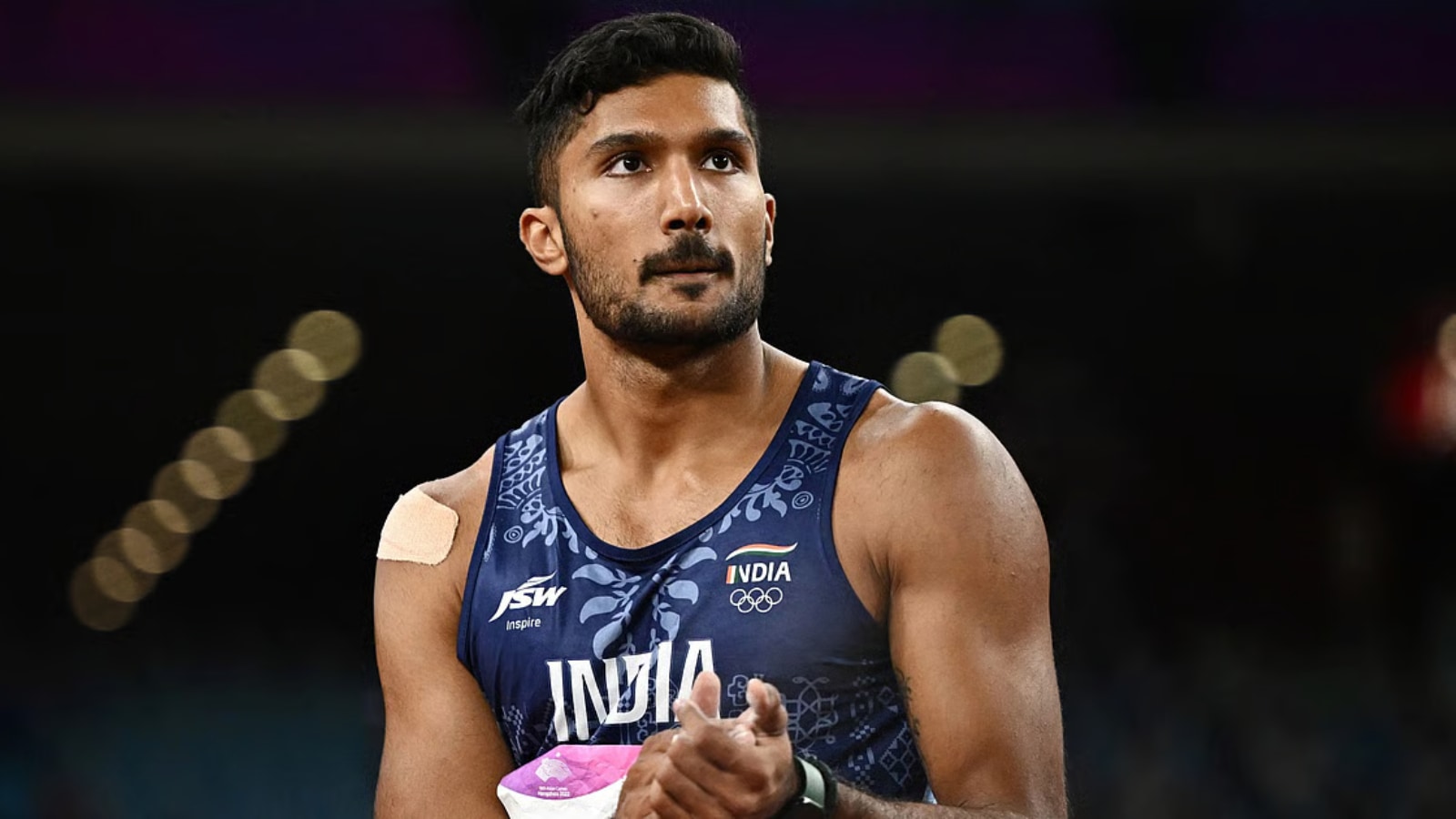
The window for athletes to train is shrinking in and around the National Capital Region because of toxic air in winter and searing summers. As the country makes a pitch for the 2036 Olympics, The Indian Express spoke to coaches and athletes from a wide range of sports — boxing, wrestling, athletics and para-athletics, cycling, shooting, hockey and also experts — on the impact of the conditions on health and training. International badminton stars, in Delhi last week for the India Open, have complained to the International Olympic Committee about the air pollution, and have cited health concerns.
****
The biggest change has been the pollution over the last few years for some reason. I’ve been in Delhi for so many years, I’ve trained pretty much for the last 10-15 years, but I feel in the last seven to eight years, the pollution has for some reason exponentially increased.
We know that when there’s more particles in the air, it becomes extremely hard to breathe. Now when you’re doing physical activity and your heart rate goes up, that just means that your body needs more oxygen to be able to convert all that into energy and be able to sustain your heart rate, which is now not 100 beats per minute, but 160 beats per minute.
So for that to happen, the uptake of air is a lot higher. And the expectation is that, through the respiratory process, the body is able to consume more oxygen. What’s happened over the last few years is now the uptake of oxygen has not been as much, but the uptake of pollution has increased because the particulate in the air has increased also.
So that directly impacts your ability to do physical activity because you see a lot of people struggling. People, not just athletes, from all spectrums, not being able to go for morning walks, not being able to do basic physical activity. Back in the day the winter months were more about if you can brave the weather. But now it’s less about the weather and more about the fact that it’s polluted.
And then summer months anyway it’s so hot that it’s extremely difficult to do anything physical. Beyond all these sorts of things, I feel like there is a physiological implication for athletes in Delhi.
And we thought it was an outdoor problem. But if people in badminton are complaining, then clearly the problem has escalated to a point where it’s affecting indoor sports also. So I definitely think it’s a big problem.
Story continues below this ad
Earlier, the biggest factor was motivation more than anything else during the winter months. You don’t want to get out of bed early in the morning or stay out late at night. So that was more of a winter problem. But now it’s escalated to where it’s become a pollution problem. When I was younger, obviously, this problem (pollution) wasn’t as persistent.
At that time, sardi ki dhoop (winter sun) used to be that time of the day when everybody would want to come out; 12 o’clock to 3 o’clock. And you wanted to make the most of that time. Because that’s when the weather would be extremely pleasant. As kids we would get out of the house around that time. Even during school hours, the teachers would take us out. But I think over the course of time, somebody like myself, I prefer to move out of Delhi.
So even this year, in preparation for the Asian Games, I left Delhi in the first week of November to be in Bhubaneswar for one month. And then I came back in December. I was here (in Delhi) for 10 days to spend some time with my family. And then I moved to South Africa. Then I came to the US. The whole idea was to try and avoid time spent in Delhi during those months. The biggest limiter is I can’t do strenuous training to the point where I want to in that preparatory phase because my lungs are going to be impacted and I don’t want to risk long term damage or do that sort of thing. Because I have bigger goals.
Story continues below this ad
I can sit and say all these things because now I’m at a luxury where funding is not a problem. I’m able to afford the trips or maybe TOPS is able to help me out. But then that might not be the case for all aspiring athletes. And some of them, even now, don’t have the option of going out of Delhi. And they don’t have the luxury of not training because competitions come up. So you can’t afford to take a two-three months break.
(Tejaswin Shankar has won medals at the Asian Games and the Asian Championships in the decathlon. He is also a Commonwealth Games medalist in the high jump. He spoke to Nihal Koshie.)

© IE Online Media Services Pvt Ltd
Disclaimer: We do not own any of the content, ideas, images, or text presented here. All rights belong to their respective owners. For more information and to view the original source, please visit the following link: