

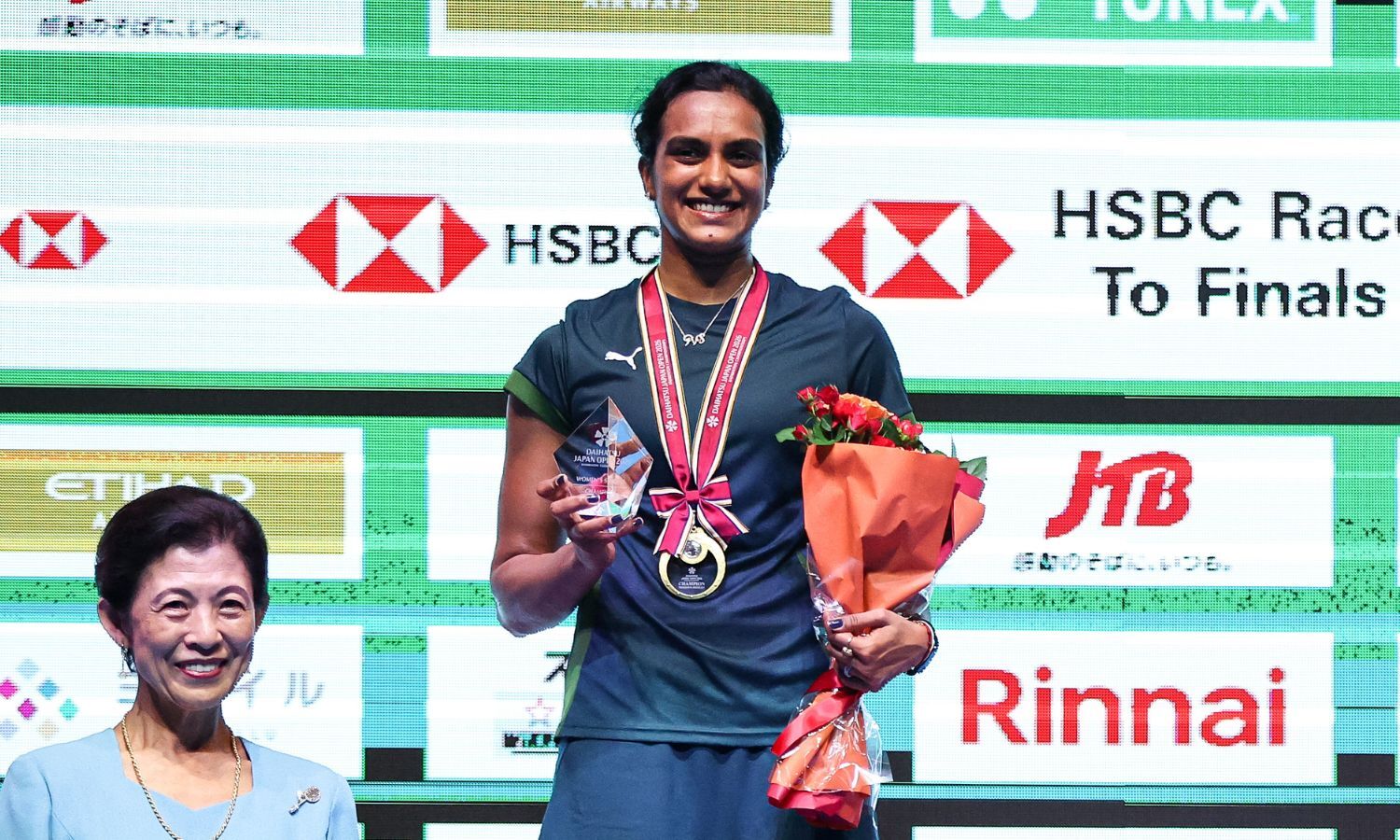
Aggression, jump smashes from back court, net dribbles from forecourt – the 2026 Japan Open was a timely reminder of what the badminton world has missed in recent years. It was PV Sindhu of old, roaring after every point, stretching herself for every point, attacking at every opportunity.
Since that ill-timed stress fracture on her left ankle at the 2022 Commonwealth Games in Birmingham four years ago, Sindhu had been a pale shadow of her best.
On Sunday at the 2026 Japan Open final against long-time rival Akane Yamaguchi, it was as if Sindhu had a point to prove. She wanted the world to note that she still had it.
“I had tears in my eyes,” she said, after winning her first major title since the BWF World Championships in Basel, Switzerland in 2019.
“It was very, very important for me to win because I was really focusing hard and working hard on myself.
“And, even though a lot of people were like, “What’s happening? Is she done?” or whatever it is, I still believed in myself,” an emotional Sindhu added, becoming the first Indian to win the Japan Open.
As the immortalised meme-template from the 2018 Bollywood biopic on Sanjay Dutt goes, Sindhu is “Not Finished.”
At 31, she still has enough in the tank to go up toe-to-toe against the best in the world.
She out-muscled world No 5 Han Yue in the Round of 16, for her eighth win in nine outings against the Chinese shuttler.
A walkover in the quarter-finals over rival-turned-friend Nozomi Okuhara gave Sindhu fresher legs for the semi-finals against former Olympic champion Chen Yu Fei.
She held her nerve in a thrilling opening game against Chen, winning two points from 19-19 to put the Chinese shuttler on the backfoot. It was clutch. The kind which has been missing in Indian badminton in the last few years.
Sindhu led 15-10 in the second game before Chen pulled her hamstring and decided to withdraw midway, sending the Indian into the final.
“I wanted to play at 100 percent, but her attack was very explosive and I was always defending,” Chen had said after the semi-final.
It was that explosive attack, which once made Sindhu one of the most feared players in the circuit. It was that attacking game which led her to an Olympic silver in 2016, the World Championships in 2019 among other accolades.
On Sunday, Yamaguchi, as she often has in their more than a decade long rivalry, once again was at the receiving end of a raging Sindhu.
The attacks were relentless. Shuttles left the racquet at lightning speed. The fastest recorded smash in the match was recorded at 398 kph. The sound of those shots, music to the ears of Indian badminton fans.
“It feels as if she has turned back the clock,” commentator Oma Gill Clark exclaimed on air.
Sindhu was in a feisty mood. She had fans and experts alike on the edge of their seats; and Yamaguchi, despite her best efforts, to hang on was blown away.
“It was very important even though I was leading that I maintained the same aggression,” said Sindhu after the match.
The credit for the resurgence in Sindhu’s attacking play, firmly goes to coach Irwansyah Adi Pratama. Since joining her team early last year, the Indonesian has worked extensively in getting Sindhu back to her older self whilst also adding to her existing arsenal.
The results started showing earlier this year, when she reached the semi-finals at the 2026 Malaysia Open Super 1000 in January. The title win now in Japan to become the oldest women’s singles player to win a Super 750 only reinforces that the duo is on the right track.
Sindhu is now willing to press forward to the net more than she ever has. She is light on her feet and quick to reach the net after a smash from the backline. There’s also an increased sense of calmness in the way she goes about her duties under pressure.
As Yamaguchi mounted late comebacks in both games of the final, the calmness was on display. Sindhu was fully aware of how she wanted to tackle the opponent and close it off.
“For me, irrespective of the semis or finals or let’s say first round, second round, I think it was important to stay calm,” said Sindhu.
“Sometimes when you’re leading you, you make sure you want to finish the rallies quicker and you tend to make simple unforced errors, which did happen.
“When it did happen late in the second game, my coach was like “It’s okay, just focus on the next point.” So, I let go of what has happened, and I was focusing on the next point. I think that made a difference,” she added.
PV Sindhu with coach Irwansyah after winning 2026 Japan Open (Photo credit: Badminton Photo/BWF)
It could also be sensed in the reviews she was asking for. Traditionally known for losing her challenges hastily, Sindhu was right on the money more often than not in Tokyo this week.
It was only fitting that she secured the championship winning point, overturning an on-court call.
For years, Indian badminton has been waiting to catch a glimpse of PV Sindhu at her best. She might just be back. Vintage Sindhu has started to roll the clock back.
More than a decade after she broke through as a teenager, a 31-year-old Sindhu is still the best India has to offer.
Disclaimer: We do not own any of the content, ideas, images, or text presented here. All rights belong to their respective owners. For more information and to view the original source, please visit the following link: