

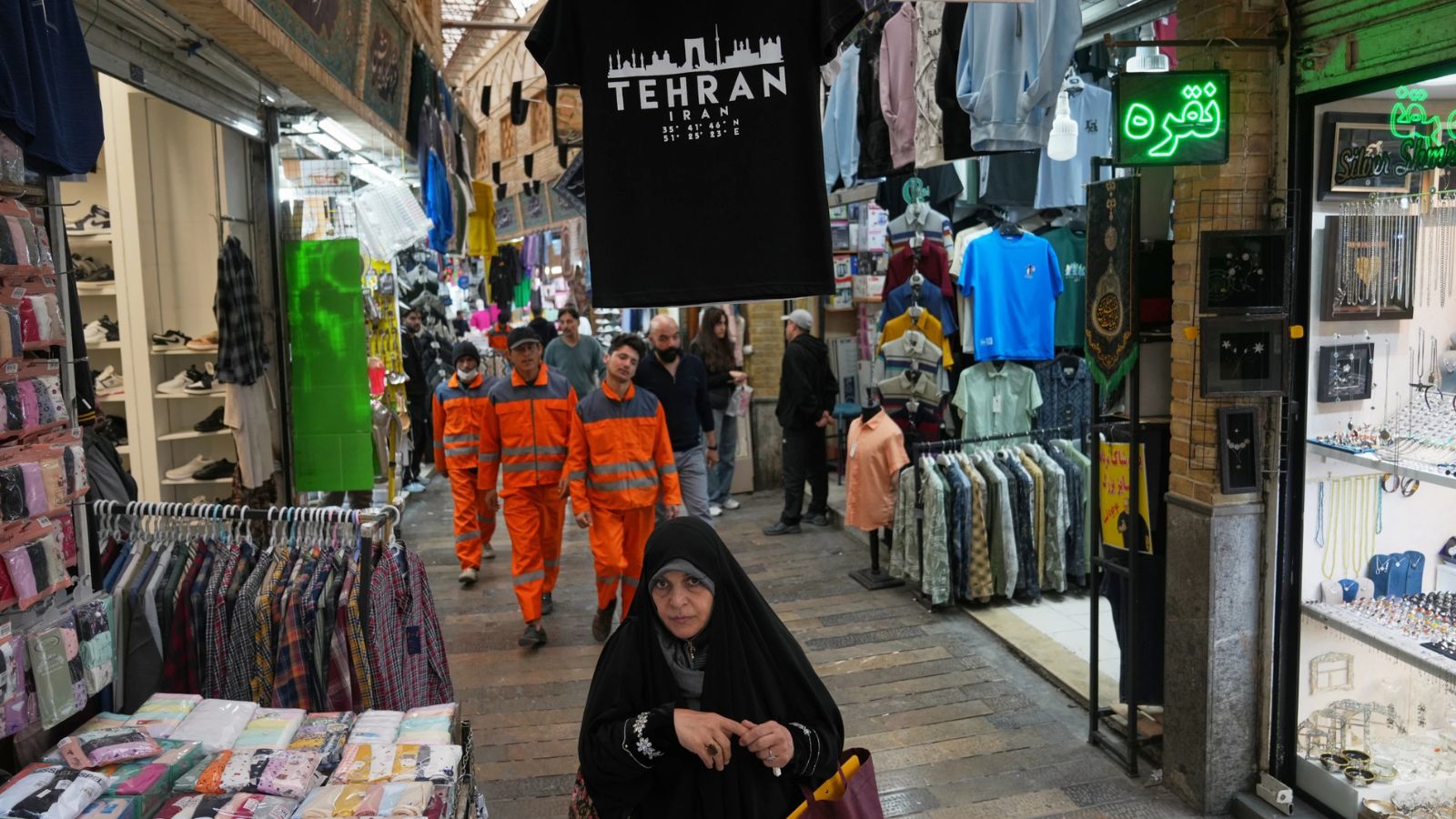
Iran is still standing after more than 100 days of US and Israel bombings that killed its top military and political leaders, reportedly destroyed its military infrastructure across land, sea, and air, and choked off its access to oil revenue.
Its economy, already weakened after years of US sanctions, has taken a considerable hit.
Tehran has taken a $347 billion loss due to the war, and the United Nations predicts its economy to contract 6.1 per cent this year.
But why has it not been decimated, and how does it continue to arm its soldiers and provide for its citizens?
Iran is not lacking in experience when it comes to economic tensions. It is a country that has battled decades of war, economic isolation, and embargoes. With so much experience, it also has found several tricks up its sleeve, which are helping it combat a lot of the challenges the nation is facing currently.
Tehran has endured extended periods of low crude exports before, including during President Donald Trump’s first term in office, when he pulled the US out of the international nuclear deal with Iran and reimposed harsh sanctions.
As Iran shut the Strait of Hormuz after the February joint attack by US and Israel, it was predicted that the move will hurt other dependent nations but also wound Tehran. This was because Hormuz’s closure was supposed to severely hinder Iran’s ability to export crude to its buyers. The key maritime chokepoint is central to the transport of around a fifth of the global fuel trade. But two things came to Iran’s aid.
Story continues below this ad
One, the effects will take some time to trickle down in the battle-hardened Iranian economy, say experts.
Two, Iran has quite a “buffer”. Before the closure of Hormuz, Iran had managed to accelerate its oil shipments to its buyer countries, which generated a bumper revenue for the nation. This helped the Iranian economy stay afloat, news media company Bloomberg reported.
Iran also uses a network of shell companies as decoys for business transactions and “dark fleets” to export its oil. The latter switch off their transponders to avoid detection, and tranfer crude oil mid-sea onto another ship to avoid getting tracked.
Additionally, the Iranian government levied a strict ban on several essential goods, mainly from agriculture, steel, and petrochemicals. But simultaneously, it boosted its exports of all other sectors that didn’t rely much on the Strait of Hormuz. This can especially be seen through its latest transactions with its neighbours, Pakistan and Afghanistan. The cargo travelling to Central China by rail has also increased since the blockade of the strait.
Story continues below this ad
The boost in goods is not limited to rail. Iran has facilitated trade through its northern ports, once primarily used for trade with Russia. All of this follows a doctrine laid by Iran’s former Supreme Leader Ayatollah Ali Khamenei. He introduced a policy of “economic resistance” in 2013 with an aim to strengthen Iran’s production capacity and reduce its import reliance. There was progress when the disappearance of foreign goods due to heavy tariffs opened the market for Iranian manufacturers, which took Iran a step further in its final aim to shield itself against isolation from the West.
iran’s central bank is also reportedly “prioritising” foreign exchange reserves for buying essential items.
Iran’s economy after the war
This is not to say that Iran’s economy is doing particularly well. Iran has suffered huge infrastructure losses due to the strikes by the US and Israel. Residential buildings, hospitals, schools, gas fields, steel plants, and many more were levelled during the attacks.
Aside from the destruction of property, thousands of Iranians have been killed in the attacks during the war, the scale of violence said to be the most intense in Iranian history. This is a key reason reasons why several businesses in the country had to shut down, slowing its economy.
Story continues below this ad
The economic damage, according to the Iranian government, before the agreed-upon ceasefire in April was $270 billion. It is almost as high as its GDP in 2026, which stands around $300 billion, according to the global body International Monetary Fund (IMF) estimates.
IMF expects the Iranian economy to crater by 6.1 per cent this year, the worst performance in decades.
The Iranian currency rial is hitting a record low, with the growth in inflation crossing 77 per cent.
The economy has become so fragile that households in the country have become increasingly dependent on credit, especially due to the absence of cash. Things have dropped to the point that there are installment plans set up for essential goods and services like books and taxi rides, according to media reports.
This has sprang up the challenge of large-scale unemployment.
Story continues below this ad
The number of unemployed Iranians has seen a great surge. According to Deputy Minister of Labour and Social Welfare Gholamhossein Mohammadi, who spoke on the issue in an interview with Etemad newspaper, at least a million jobs are thought to be lost ever since the US-Iran tensions began.
The United Nations Development Programme (UNDP) estimates that about 5 per cent of the Iranian population is expected to drop below the international poverty line. That is, according to Bloomberg, about 4.1 million people.
Iranian economy before the war
The Iranian economy’s health was far from ideal even before the current war.
Iran was grappling with high inflation, with basic food items such as eggs, potatoes, and rice unaffordable for many. People turned to cheaper alternatives to many food items- substituting red meat and chicken with soya beans.
Story continues below this ad
The price increases became severe due to a sharp decline in Iranian exports and foreign currency inflows. This mostly began when the US reimposed high sanctions on the country when Trump came to power in 2016. Because the supply of dollars present in the country has become tight, the rial has greatly fallen, making all imports expensive.
This has led to mass protests and massive state crackdowns due to the rial’s decline, leading to the death of thousands, prompting the government to step in and try to make changes to address the problems of the public. The government replaced the head of the Iranian central bank, started paying cash subsidies and salaries earlier than previously scheduled, and even increased wages for government employees.
But despite all these measures, the people of Iran have gained hardly any relief from the difficult state of affairs in the country.
Can this economic trouble cause a regime change in Iran?
According to Bloomberg, while the possibilities of civil unrest ranks high, the risk of regime change is only moderate. This is because the Islamic Revolutionary Guard Corps still hold a tight grip on state power. Additionally, the war has fuelled public opposition against the US and Israel, shielding the Iranian government from the public’s dicontentment.
Story continues below this ad
Regardless of whether the regime change takes place or not, reconstruction will not be easy for the Iranian economy. According to The New York Times, the investment fund to be facilitated by the US in Iran, according to a draft agreement, could be around $300 billion.
(Written by Nityanjali Bulsu, who is an intern at The Indian Express)
Disclaimer: We do not own any of the content, ideas, images, or text presented here. All rights belong to their respective owners. For more information and to view the original source, please visit the following link: