

Here is the first line on the acknowledgments page of my novel A Time Outside This Time: “In a 2017 article on behavioural science in The New Yorker, I read that grocers had learned that they could sell double the amount of soup if they placed a sign above their cans reading ‘12 PER PERSON’.”
The sign used by the grocers is a part of a phenomenon that psychologists call “anchoring,” and an aspect of anchoring is what is called “priming”. The associative mechanism in our thinking — let’s say, if someone says, “train travel in India” and I think immediately of Shah Rukh Khan and Malaika Arora dancing atop a moving train — gives us insight into our memories and ideologies. Associative thinking is of interest because it shows us that the behaviour of individuals and groups can be primed by events as well as messaging and propaganda; equally significantly, priming explains how our unconscious biases affect our thinking that we would otherwise consider independent or rational.
In A Time Outside This Time, my narrator’s wife, a psychologist, has educated him about how priming effects can be achieved even when the actors in the experiment are not necessarily conscious of how their behaviour is being directed or altered. My narrator has been told about an experiment carried out in the office kitchen at a British university: “People at the office made tea or coffee for themselves and paid for it on an honour system by dropping money into a box. This had gone on for years. Then, someone put up a picture of a pair of eyes that appeared to be looking directly at the observer. After this was done — the two wide-open eyes staring at the tea or coffee drinkers — the contributions went up three times.”
Priming happens in unconscious ways.
Let me take up an example from India. In July this year, a travel agent issued tickets for a Delhi-Kochi flight to two journalists but misspelled their names by a single letter. The vigilant CISF guards manning the airport gates spotted the error but let one of them enter the airport anyway, while the other was told the mismatch in spelling meant they would not be allowed entry into the airport. One’s name was Siddharth Varadarajan, the other Ziya Us Salam; one was Hindu, the other Muslim; both had beards, but one’s was fuller than the other’s. Speaking alone in Kochi later that day, because Salam had not been allowed to travel, Varadarajan asked a question that would have befitted someone carrying out a psychological experiment: “Guess who got into the airport and who didn’t?”
Trolling, slurs and politics
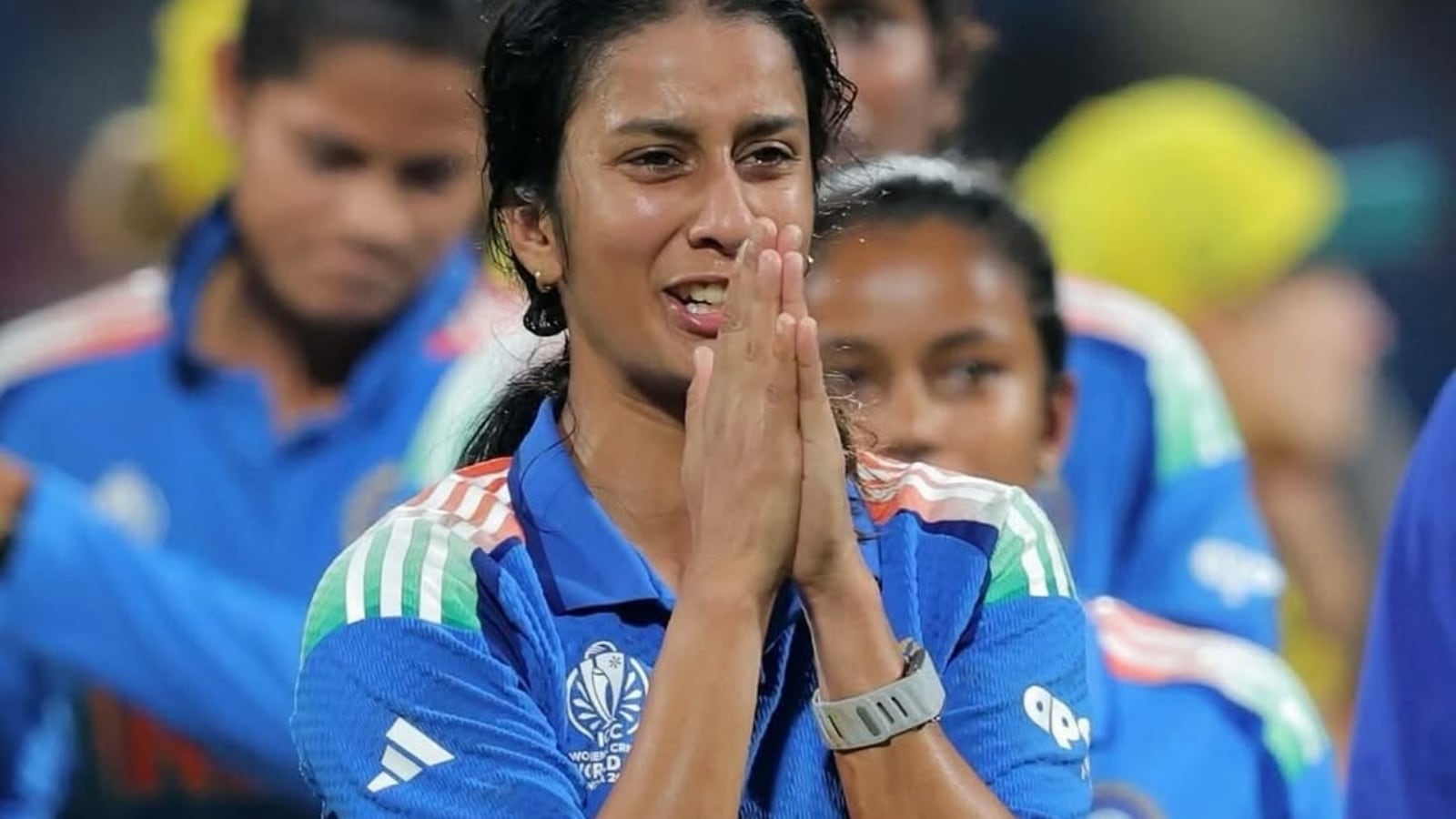
Now that I have primed you with psychological gyaan, let us consider the case of the most recent star of Indian cricket, Jemimah Rodrigues. What do our responses to her performance and her identity tell us about why we come to believe what we believe?
Rodrigues was the Player of the Match for her unbeaten 127 in the World Cup semi-final match against reigning champions Australia. When the Indians took their score past Australia’s, they broke records and unleashed a torrent of emotion in the hearts of all the Indian fans. I can confess that tears were streaming down my face when Rodrigues told the entire stadium and the world that she had cried every day of the tournament. It had been a struggle. How she had been dropped from the team, how she had been feeling anxious and numb. She expressed her gratitude to her teammates who held her up when she needed to keep going despite the pressure-cooker conditions of heat and humidity during the match. She quoted from the Bible and said that she had put her faith in God. She thanked Jesus.
The tears had barely dried on our faces when reports began appearing on social media about the intense trolling that Rodrigues had faced in the past — and was now doing again because she had thanked Jesus. I learned that in 2024 Rodrigues lost her membership at the Khar Gymkhana because her father had allegedly used the club premises to conduct conversions. (Ivan Rodrigues, the cricketer’s father, has denied such claims.) A slur used to describe Christians began to pop up with disgusting regularity on X and other media.
There were also other responses. Some offered plain applause for Rodrigues. Others went further. An artist I know posted as his Facebook update the following message: “Jemimah Rodrigues scored a century against Australia and a double century against Hindutva.”
Various people wanting to, or pretending to, stand above the fray, said in response: “Please don’t drag politics into sports.” I thought both the artist as well as his critics had been primed to do so because of what happened during and after the Indian men’s cricket team’s victories over Pakistan at the T20 Asia Cup in September.
How beliefs prime our responses
I’m not here to question the wisdom of our leaders; instead, I want to say something about how it is that we are primed to accept any particular view. We mostly think that our conclusions are sound. But the psychologist Jonathan Haidt has warned us that “the emotional tail wags the rational dog”. We should be wary of our certainties.
When I was a boy growing up in Patna and then in the cities of what later became Jharkhand, I attended schools that were run by Christian missionaries. These schools provided good education. However, in each institution I attended, I was warned by family members and neighbours that the padres used the premises for conversions. Was this the reality? Had a partial truth been turned into a stereotypical generalisation?
I mourn the childhood where a bias — a suspicion shading into bigotry — had turned into a fear that stained my experience.
Our beliefs, shaped by our biases and by the influences that have primed us, determined the ways in which we responded to Rodrigues on Thursday. She had played the innings of her life, and many of us, certainly those who called her derogatory names, robbed her of that complete feeling of triumph she certainly deserved. Perhaps I should add, we also robbed ourselves of what we should feel as a nation and a people.
Kumar, a novelist and artist, is professor of English at Vassar College
Disclaimer: We do not own any of the content, ideas, images, or text presented here. All rights belong to their respective owners. For more information and to view the original source, please visit the following link: