

Last Updated:
The core of the demand lies in language. In Malayalam, the state has always been called “Keralam”.




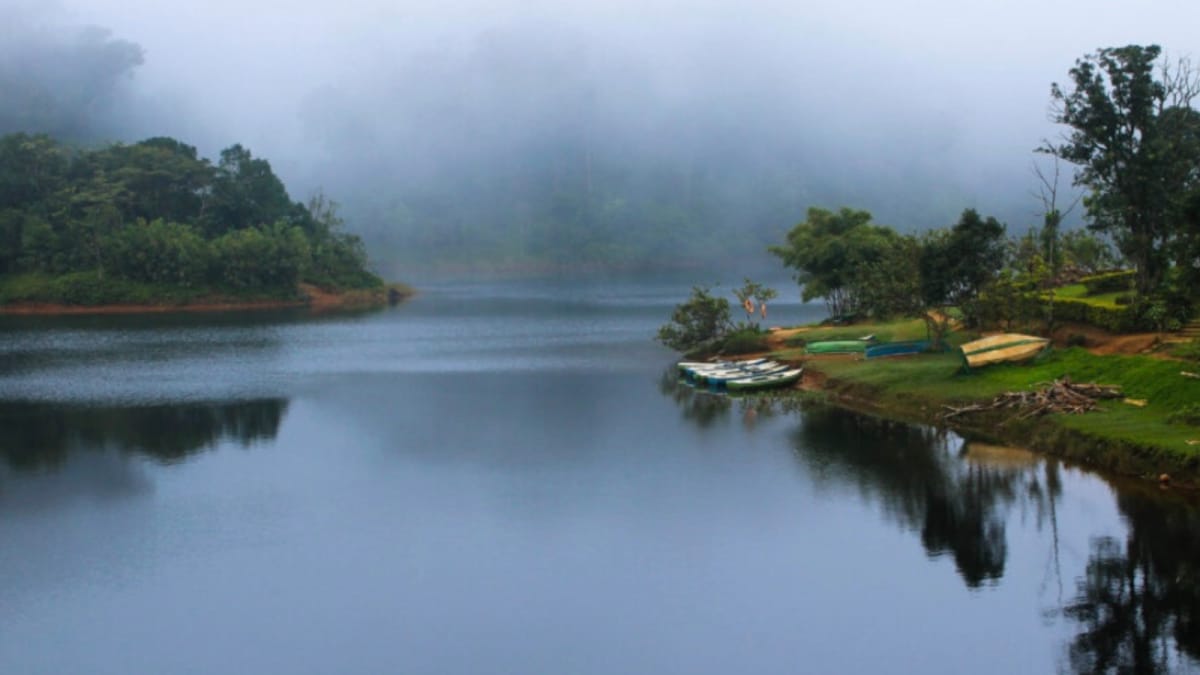
Historians trace the origins of the name to the ancient Chera dynasty, which ruled much of present-day Kerala. (File photo)
The Union Cabinet on Tuesday approved the Kerala government’s proposal to rename the state as “Keralam”, backing a long-standing demand to align its official name with its original form in Malayalam.
The decision follows resolutions passed twice by the Kerala Legislative Assembly — in August 2023 and June 2024 — urging the Centre to amend the First Schedule of the Constitution and adopt “Keralam” in all languages listed in the Eighth Schedule.
The resolutions were moved by Kerala Chief Minister Pinarayi Vijayan and received unanimous support from both the ruling LDF and the Congress-led UDF opposition.
The state government has maintained that the move is not symbolic, but a correction of how the name appears in official records.
ALSO READ: Keralam Loading: How Constitution Governs Kerala’s Renaming | Explained
A Linguistic Argument
The core of the demand lies in language. In Malayalam, the state has always been called “Keralam”. Linguists note that in Dravidian languages, place names commonly end with the suffix “–am”. Examples include Malayalam and Tamilakam.
According to scholars, “Keralam” is the grammatically complete form in Malayalam, while “Kerala” emerged as an adaptation in English and other languages. Words ending in “–am” in Sanskrit and Dravidian traditions often lose the final consonant when adopted into English.
For instance, “Ramam” becomes Rama and “Krishnam” becomes Krishna. Over time, “Keralam” similarly came to be written as “Kerala” in English usage.
ALSO READ: Kerala To ‘Keralam’: Which Are The States, UTs Whose Names Have Changed Since India’s Independence?
Tracing The Name To Ancient Times
Historians trace the origins of the name to the ancient Chera dynasty, which ruled much of present-day Kerala. The region was once known as “Cheralam” — a combination of “Chera” and “alam”, meaning land or region. Over centuries, phonetic changes are believed to have transformed Cheralam into Keralam.
Strong historical evidence also comes from the 3rd century BCE inscriptions of Mauryan emperor Ashoka. In his Rock Edict II, Ashoka refers to a southern ruler as “Keralaputra”, widely seen as the earliest recorded mention of the name.
The popular belief that Kerala means “land of coconuts” remains widespread, but historians say this is a later folk interpretation rather than the true origin.
Political Consensus Grows
Support for the change has broadened in recent months. In January this year, the Kerala unit of the BJP backed the move, with its state president Rajeev Chandrasekhar writing to Prime Minister Narendra Modi and Kerala Chief Minister Vijayan in support.
Chandrasekhar had noted that recognising the name Keralam would help preserve linguistic culture and strengthen social unity
With the Cabinet’s nod, the proposal moves a step closer to formal adoption, marking a significant moment in the state’s effort to preserve its linguistic identity and historical legacy.
(With inputs from agencies)
Kerala, India, India
February 24, 2026, 20:47 IST
Read More
Disclaimer: We do not own any of the content, ideas, images, or text presented here. All rights belong to their respective owners. For more information and to view the original source, please visit the following link: