

Last Updated:
Abhay Chautala triggered a row after suggesting India should adopt youth-led protest tactics seen in Sri Lanka, Bangladesh and Nepal to remove the current government from power.
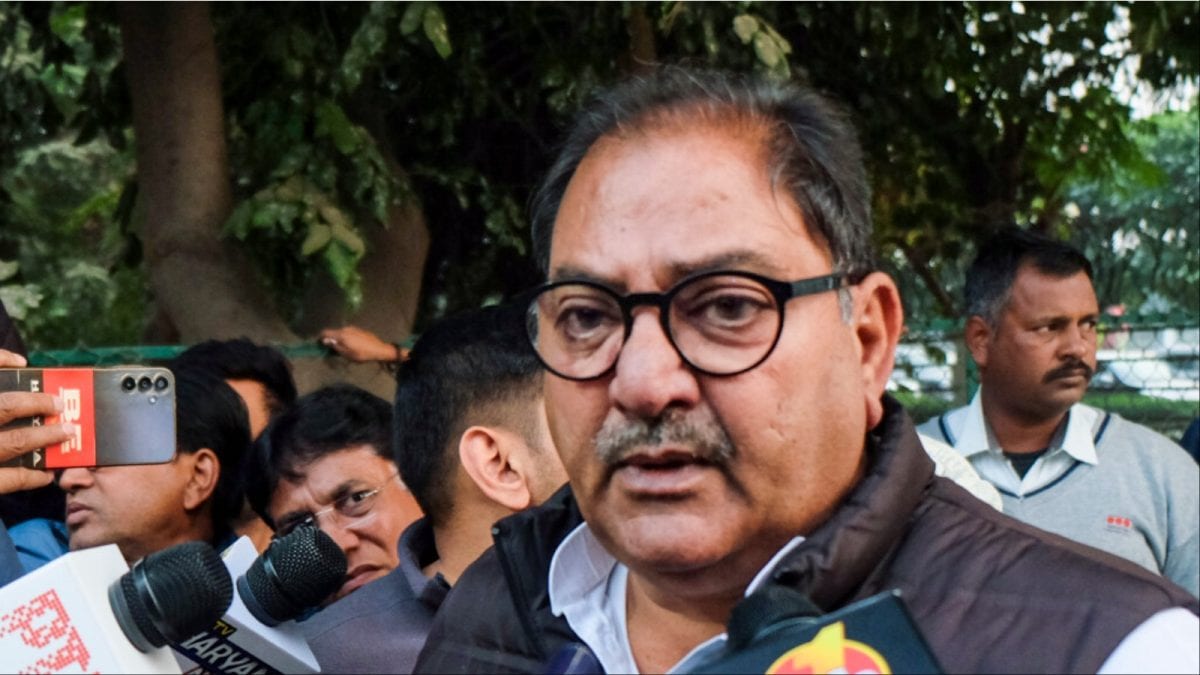
A file photo of Abhay Singh Chautala (PTI)
Indian National Lok Dal (INLD) national president Abhay Singh Chautala has sparked a row with a controversial remark suggesting that India should witness movements similar to those that recently toppled governments in Sri Lanka, Bangladesh and Nepal.
In a widely circulated video, Chautala said the mass protests in those countries, led largely by youth, should serve as a model to “throw the present government off power” in India.
“In Sri Lanka, the way the youth of Bangladesh forced the government to leave the country, the way the youth of Nepal forced the government to leave the country, the same tactics will have to be implemented in India too to throw the present government out of power,” he stated.
As his remarks went viral on social media, BJP national spokesperson Shehzad Poonawalla characterised it as a threat to the constitutional order and democratic norms.
In a video message, Poonawalla accused opposition figures of adopting an “anti-constitutional, anti-India” mindset in their criticism of Prime Minister Narendra Modi.
He said such rhetoric reflects a willingness to “go against Ambedkar’s Constitution” and undermines faith in India’s democratic processes.
“They will go against democracy just because they want to score a political point,” he asserted, adding that the remarks show opposition parties are putting their “own interests above national interests.”
Another voice from the ruling party, BJP spokesperson Pradeep Bhandari, took to social media platform X to underline what he described as an “anti-India narrative” emerging among opposition leaders.
Bhandari cited Chautala’s remark and alleged that senior opposition figures, including Rahul Gandhi, have propelled a narrative that challenges the legitimacy of India’s political system.
Abhay Chautala, JJP who stood against BJP in Haryana Assembly polls says:” time has come to repeat what has happened in Bangladesh, Nepal in India”
The fire of this Anti India Narrative has been propelled by Rahul Gandhi……..
Leaders in Opposition after repeated defeats… pic.twitter.com/6uszWyK4S8
— Pradeep Bhandari(प्रदीप भंडारी)🇮🇳 (@pradip103) January 2, 2026
Haryana Cabinet Minister Krishan Bedi also responded, questioning the credibility of the comments and the ideological consistency of the parties involved.
Referring to Chautala, Bedi highlighted the family’s long political history and criticised statements he described as contradictory to democratic values.
He invoked the legacy of former Deputy Prime Minister Tau Devi Lal, stressing that democratic struggle should be respected rather than undermined.
Chautala’s comments drew attention for referencing recent political upheavals in South Asia that saw longstanding governments forced out amid widespread public protests.
In Sri Lanka, mass movements erupted in 2022 as the country plunged into a severe economic crisis marked by shortages of essentials, fuel rationing and runaway inflation.
Large protests, led prominently by youth and civil society groups, culminated in the resignation and departure of President Gotabaya Rajapaksa as demonstrators occupied key government buildings and demanded accountability from political elites.
A democratic transition followed, with a new leadership promising reforms and economic stability.
In Bangladesh in 2024, what began as student protests against a government quota system perceived as discriminatory quickly escalated into a nationwide mass uprising.
Demonstrators under banners such as “Students Against Discrimination” mobilised to demand the resignation of Prime Minister Sheikh Hasina.
The movement snowballed into a broader anti-government uprising marked by demonstrations, civil disobedience and clashes with security forces.
The protests ultimately forced Hasina’s resignation and flight from Dhaka, and an interim government was formed.
In similar protests in Nepal in 2025, youth-led demonstrations were triggered when the government imposed a ban on major social media platforms, including Facebook, YouTube and X.
The demonstrations spread rapidly across Kathmandu and other cities, with clashes between protesters and security forces.
Facing mounting pressure and unrest, Prime Minister KP Sharma Oli resigned, and an interim government was appointed.
ALSO READ | 8 US Lawmakers Seek Bail, Timely Trial For Umar Khalid, Question His Over 5-Year Detention
January 02, 2026, 13:38 IST
Read More
Disclaimer: We do not own any of the content, ideas, images, or text presented here. All rights belong to their respective owners. For more information and to view the original source, please visit the following link: