

Last Updated:
The court emphasised that CCL was introduced as a welfare measure to help working women balance professional duties with parental responsibilities

The court held that the Tribunal had failed to appreciate that the respondents had sanctioned EOL for the same period during which CCL was sought. (File)
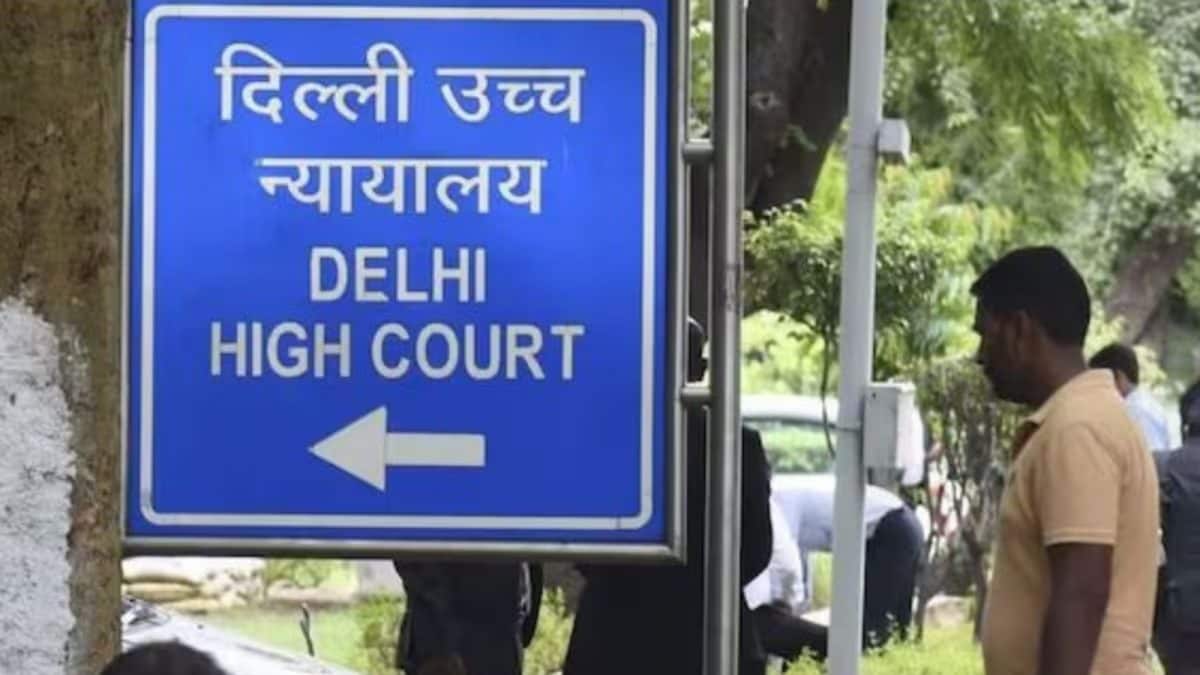
The Delhi High Court recently held that Child Care Leave (CCL) cannot be denied arbitrarily and must be granted with due regard to the welfare of the child and the needs of the mother.
A Bench of Justice Navin Chawla and Justice Madhu Jain observed, “While CCL is not an entitlement as of right, the discretion to deny cannot be exercised arbitrarily or mechanically. It must be guided by the object and spirit of the rule, which is to support the welfare of the child and the legitimate needs of the mother.”
The Court emphasised that CCL was introduced as a welfare measure to help working women balance professional duties with parental responsibilities.
“Recognising that working mothers often face practical difficulties in attending to their children’s needs due to official constraints, CCL was designed to afford them flexibility to personally care for their children whenever circumstances so require,” the Bench added.
These observations came while dealing with a plea filed by a woman employed as a TGT (Mathematics) at the Government Co-Ed Senior Secondary School, Hiran Kudna, New Delhi. She had sought CCL on multiple occasions to take care of her two children, both in Classes X and XII, at a time when her husband, who works as a Marine Engineer, was posted outside India for long periods.
When the petitioner first applied for CCL for a long spell, her request was denied by the school principal on the ground that no substitute mathematics teacher was available and her absence would affect students. She applied again for another extended period, but the request was again not granted. The principal later wrote to higher authorities stating he had no objection to granting CCL if a substitute or guest teacher could be arranged.
The petitioner was eventually granted a shorter stretch of CCL, but she stated that on a later occasion, she was compelled to give an undertaking that she would not seek CCL in the future. On this condition, she was granted 15 days of leave, which was later extended to a total of 27 days.
She claimed that when her son fell unwell, she again sought CCL, but her request was not considered. During this time, however, her application for Extraordinary Leave (EOL) was approved, and 303 days’ EOL was sanctioned for the period from July 2, 2017, to April 30, 2018.
Aggrieved by this, she approached the Central Administrative Tribunal seeking conversion of the sanctioned EOL into CCL. The Tribunal rejected her plea, holding that CCL is not a matter of right and cannot be allowed if long absences interfere with the functioning of the school.
Hearing the challenge to the Tribunal’s decision, the High Court examined the relevant rules and the guidelines issued by the Government of India, including the DoPT’s 2008 office memorandum stating that CCL can be granted to a woman government employee for up to 730 days during her entire service for taking care of up to two children.
Noting inconsistency in the authorities’ conduct, the Court said, “It is worth noting that, if EOL could be managed for the same period, the plea that CCL would disrupt the functioning of the school loses its force. The denial of CCL, despite sanctioning EOL, therefore appears arbitrary and discriminatory, and not in consonance with the object and spirit of Rule 43-C of the Rules.”
Allowing the petition, the Court held that the Tribunal had failed to appreciate that the respondents had sanctioned EOL for the same period during which CCL was sought. This contradiction, the Bench said, ought to have been viewed as an indication that administrative exigency was not so pressing as to justify the denial of CCL.
“The reasoning adopted by the learned Tribunal, therefore, cannot be sustained,” the Court concluded.
Accordingly, the petition was allowed and the Tribunal’s impugned order was set aside.
November 14, 2025, 20:24 IST
Read More
Disclaimer: We do not own any of the content, ideas, images, or text presented here. All rights belong to their respective owners. For more information and to view the original source, please visit the following link: