

3 min readMumbaiFeb 4, 2026 11:00 PM IST
Even as the US has agreed to reduce tariffs on Indian goods from 50 per cent to 18 per cent, reactions from Bhiwandi’s textile market have been cautious, with powerloom owners saying the cut still leaves duties well above earlier levels and the impact on their business remains uncertain.
Bhiwandi was a thriving powerloom hub with a report from the National Institute for Micro, Small and Medium Enterprises (NI-MSME) stating that as many as 12 lakh powerlooms alone were situated in Bhiwandi with its industry’s turnover estimated at Rs 10,000 crore annually.
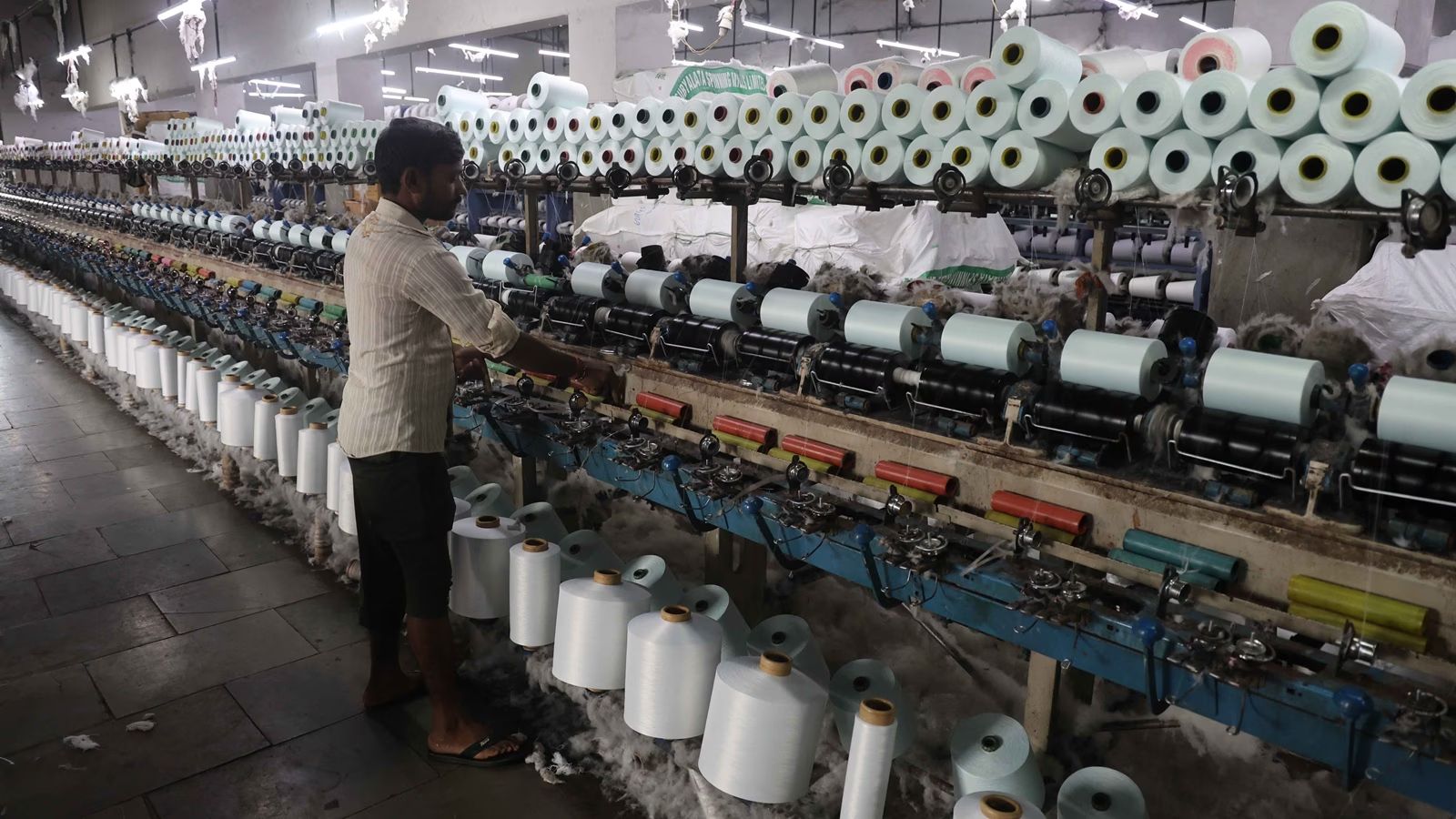
Having transitioned from traditional handlooms, the powerlooms in Bhiwandi spin yarn to churn out raw material, known as grey cloth in local parlance, which is later sent across merchants and centres for finished textile products.
However, in the recent past, the total number of powerlooms in Bhiwandi has dwindled below 4 lakh owing to the blows dealt to the unorganised industry by demonetisation, followed by immediate implementation of GST and high power tariffs.
The sharp tariff hike imposed by the US in August 2025, which pushed duties on several Indian goods beyond 50 per cent, had raised fears of a severe blow to Bhiwandi’s traditional industry, as textiles form the largest share of Indian exports to the US.
While Monday’s announcement of a reduction to 18 per cent has brought relief to some sectors, loom owners in Bhiwandi said the picture remains unclear.
“For us, the picture remains pretty unclear as we still don’t know the tariff bracket on textiles. It is too early to judge how it will impact us,” said Akram Ayub Ansari, a powerloom owner whose family has been in the trade since 1942.
Story continues below this ad
“While the overall tariff has been cut to 18 per cent, it is significantly higher than the tariffs of 3–4 per cent which was previously imposed on the raw material exports to US,” he added.
Another power loom owner said the reduction had not altered the basic disadvantage faced by the sector. “Textiles and other Indian goods were previously facing tariffs of 3 per cent in the US which shot to 50 per cent, last year. Now, the tariff may be slashed to 18 per cent but our position remains the same, if not worse as our tariffs have increased nearly 7 times from what it used to be.”
Some traders, however, said Bhiwandi’s largely domestic market focus had insulated it from the earlier hike and could soften the effect of the latest change.
Saleem Ansari, a second generation powerloom owner, said, “In Bhiwandi, we largely make raw clothes and trade in local markets. Since we do not make export quality clothes, our units did not face as much impact after the steep increase in US tariffs last year as the big manufacturing units exporting to US did. Similarly, the impact of the tariff slash may also not impact Bhiwandi directly but it may certainly give a boost to the textile business on the large.”
Story continues below this ad
For now, traders said they were waiting for clarity on how textile products would be categorised under the revised tariff structure, even as uncertainty continues to loom over Bhiwandi’s power looms.

Disclaimer: We do not own any of the content, ideas, images, or text presented here. All rights belong to their respective owners. For more information and to view the original source, please visit the following link: