

ISRO earlier said, EOS-09 equipped with its payload- Synthetic Aperture Radar- has been designed to provide continuous and reliable remote sensing data for operational applications across sectors.
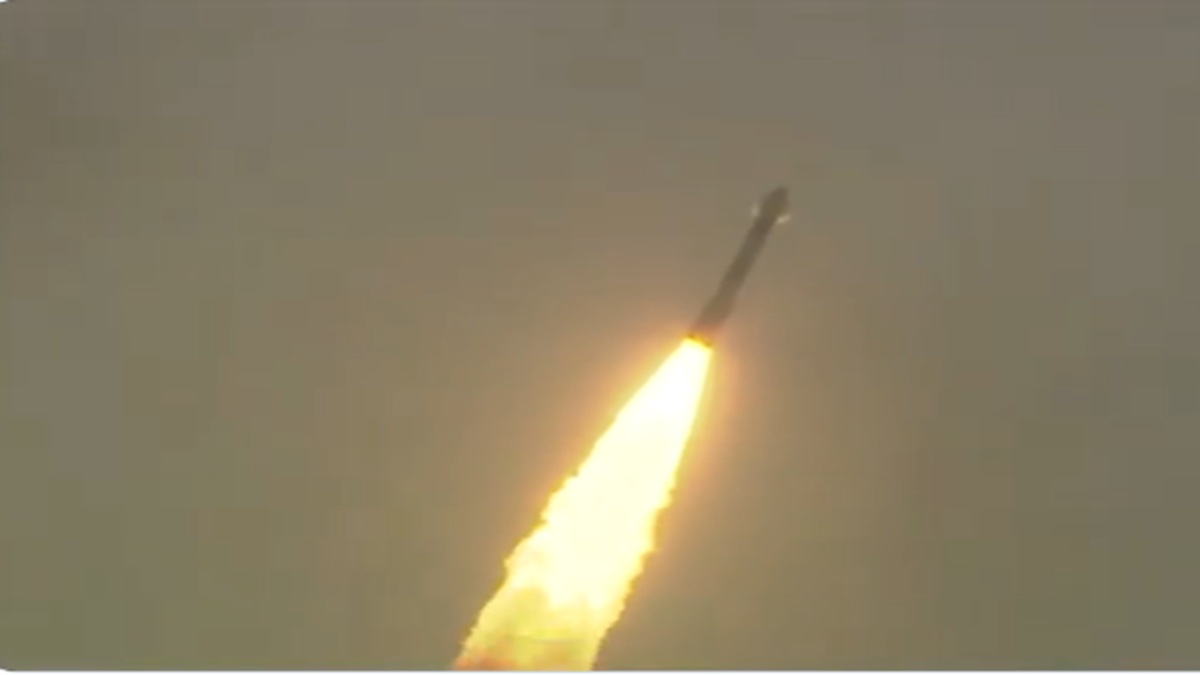
A PSLV-C61 rocket carrying the Earth observation satellite EOS-09 lifted off from the spaceport Sriharikota early on Sunday (May 18). As per ISRO reports, the mission was not successful as there was a technical glitch in the performance of the third stage, due to which the mission could not succeed. On the launch of PSLV-C61, ISRO chief Dr V Narayanan said, “EOS-09 mission could not be accomplished, and we will come back after analysis.” During the functioning of the third stage, we are seeing an observation, and the mission could not be accomplished. After analysis, we shall come back., said ISRO.
ISRO posted on X and said, “Today 101st launch was attempted, PSLV-C61 performance was normal till the 2nd stage. Due to an observation in the 3rd stage, the mission could not be accomplished.”
Indian Space Research Organisation (ISRO) launched PSLV-C61, which carries the EOS-09 (Earth Observation Satellite-09) into a SSPO orbit, from Andhra Pradesh. EOS-09 is a repeat satellite of EOS-04, designed with the mission objective to ensure remote sensing data for the user community engaged in operational applications and to improve the frequency of observation. This was the 101st mission of the Indian Space Research Organisation (ISRO) from Sriharikota.
As the 22-hour countdown concluded on Sunday, the 44.5 metre tall launch vehicle, ‘PSLV-C61’ in its 63rd flight blasted off at a prefixed time of 5.59 am from the first launch pad, carrying the satellite.
EOS-09 equipped with its payload – Synthetic Aperture Radar – has been designed to provide continuous and reliable remote sensing data for operational applications across sectors, ISRO said. The satellite has a mission life of 5 years. This is designed to be a debris-free mission.
Disclaimer: We do not own any of the content, ideas, images, or text presented here. All rights belong to their respective owners. For more information and to view the original source, please visit the following link: