

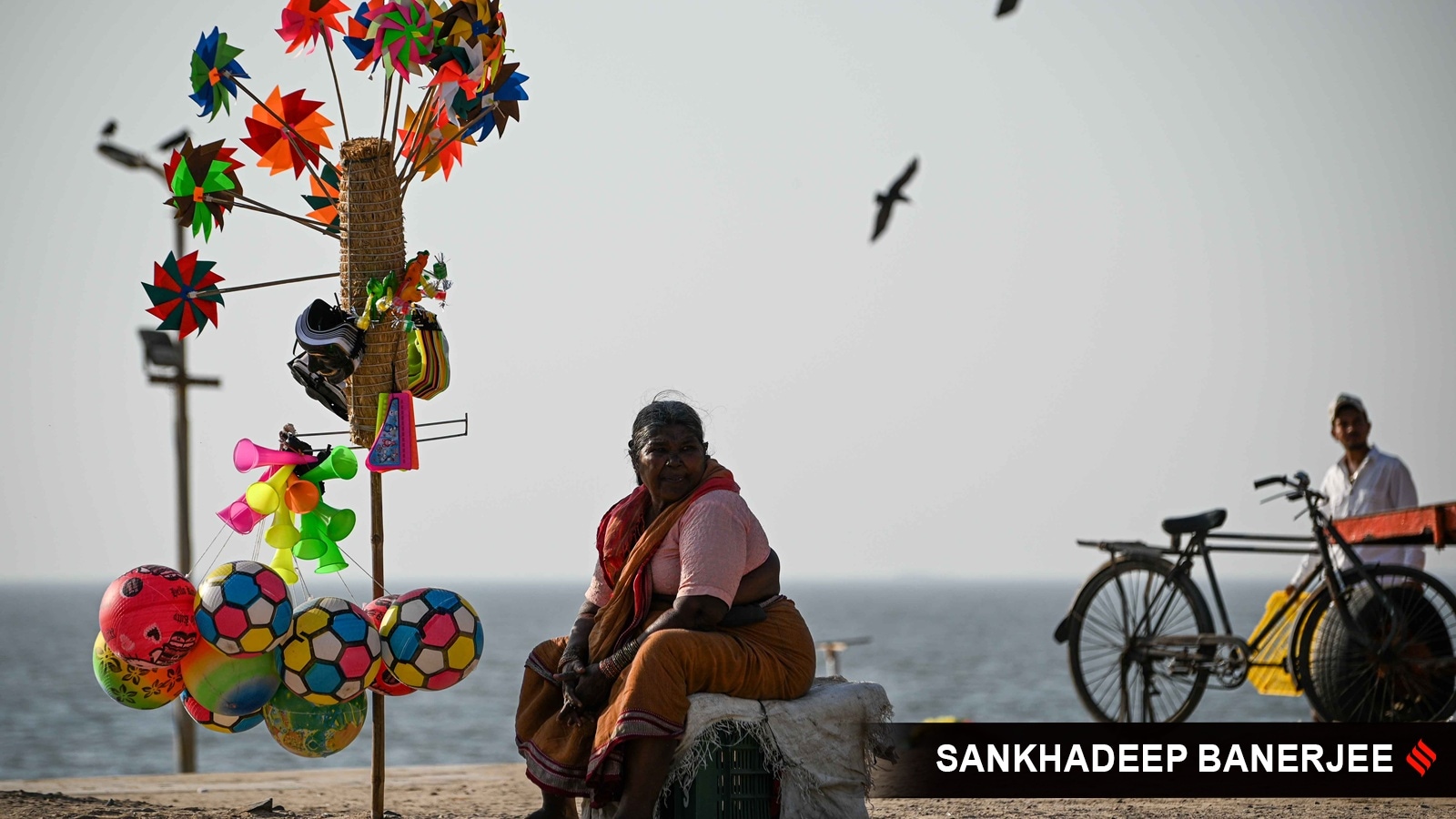
With extreme heat related events on the rise, Maharashtra government is developing a first-of-its-kind Heat Resilience Framework for Mumbai, Thane and Nagpur cities in a pilot project which seeks to enhance preparedness and responsiveness during heatwave events. The framework will conduct a ward level analysis to map areas facing the highest risk of heat duress, while assessing the cities’ vulnerabilities on five parameters ranging from social to economic factors.
According to senior officials, the project seeks to adopt a structured approach to address heat-related challenges and access vulnerabilities at the local level.
Speaking at the National Disaster Management Authority’s International workshop on heatwave in February earlier this year, Maharashtra Chief Secretary Sujata Saunik said the initiative will support urban bodies in identifying key areas requiring intervention to strengthen resilience against rising temperatures, as opposed to having a generic approach to heat action at local level. “By enabling local self-governments to analyze various indicators—such as access to essential services, economic stability, and environmental risks—it aims to facilitate targeted policy actions and improve preparedness for extreme heat events,” said Sunaik.
Dr. Vishwas Chitale, senior programme lead at Council on Energy, Environment and Water (CEEW), who have been roped in to support cities in conducting a granular study, told The Indian Express that the research seeks to conduct a granular analysis of the three cities in a bid to determine the heat risk and the response plans. He said, “In our granular study, we are assessing the cities at a ward level to understand which areas are at the highest risk of heat duress.”
“For each city, the framework will look at three matrices with the first being the preparatory matrix, which lay down preparedness guidelines for the action plan before a heat event. The second matrix pertains to the response plans during the course of an extreme heatwave event and finally, the final matrix will encompass the long-term mitigation plans,” added Dr Chitale.
The project will prepare frameworks for Mumbai, Thane and Nagpur — while Thane was selected owing to the increased heat stress amid increased urbanisation and depleting green cover, Nagpur was chosen in light of its extreme summer temperatures with highs of over 45 degrees and water scarcity woes. Meanwhile, Mumbai was picked due to its high-density population, extreme rainfall and intensifying heat stress through urban heat island effect.
Data furnished by the Mumbai Climate Action Plan in 2022 shows that Mumbai has recorded a warming trend over the past 47 years between 1973 and 2020 with reports by NOAA and Climate Lab projections estimating that almost 60 per cent of days in a year will comprise high heat days in Mumbai by 2040. Coupled with high humidity, the higher temperatures could accelerate heat-related deaths and illnesses in the years to come.
Story continues below this ad
Even so, heatwave is currently not included as a notified disaster under the Disaster Management (DM) Act, 2005.
At present, while Maharashtra has a State Heat Action Plan (HAP), Mumbai’s heat resilience plans are also steered by Mumbai Climate Action Plan. Meanwhile, Thane launched its own heat action plan last year.
However, several experts concur that they are insufficient to tackle the crisis. A recent report released by Sustainable Futures Collaborative found that most studies focus on immediate response to heat waves while long-term actions remain the same. The study examined how nine cities including Mumbai are gearing up to address the growing threat of heat stress.
According to Dr Chitale, the heat resilience framework is being developed as complementary research to the existing Heat Action Plans to assist governments with the local-level analysis and implement effective preparedness measures on the basis of the findings.
Story continues below this ad
Confirming the developments, senior officials from Brihanmumbai Municipal Corporation’s (BMC) disaster management cell said the framework is being readied over the past six months. “The developments are still underway. Since temperatures in the city are on the rise, the idea of the pilot project was to study the three cities in-depth and accordingly, prepare a list of dos, don’ts as well as detailed plans to manage the heatwave events,” an official added.
Disclaimer: We do not own any of the content, ideas, images, or text presented here. All rights belong to their respective owners. For more information and to view the original source, please visit the following link: